2026.06.21
 Blog
Blog
Content
For quality assurance managers, cleanroom supervisors, and export sourcing professionals, selecting the correct wiping material directly impacts product yield, contamination control, and regulatory compliance. Standard industrial wipes are designed for general cleaning tasks where moderate cleanliness is acceptable. Cleanroom Wipes are engineered specifically for controlled environments where particle generation, fiber release, and chemical residues must be minimized to protect sensitive products and processes. Understanding the technical differences between these wiping categories helps buyers select the appropriate solution for applications ranging from semiconductor fabrication to pharmaceutical manufacturing.
Standard industrial wipes are manufactured in conventional factory settings without special contamination controls. They may be made from cotton, paper, recycled textiles, or standard non woven materials. While effective for removing gross contamination, these wipes can introduce new contaminants including loose fibers, particles, and chemical residues. Cleanroom wipes are manufactured in controlled environments with HEPA filtered air, laundered to remove manufacturing residues, and packaged in cleanroom grade materials. The following table summarizes the key performance differences between cleanroom wipes and standard industrial wipes.
| Performance Indicator | Cleanroom Wipes | Standard Industrial Wipes |
|---|---|---|
| Particle Generation Level | Ultra low documented particle counts | Variable often high and undocumented |
| Fiber Release | Minimal sealed or bonded edges | Common from cut edges and fabric damage |
| Manufacturing Environment | HEPA filtered cleanroom conditions | Standard factory uncontrolled environment |
| Laundering Process | Specialized cleanroom laundering | None or standard commercial laundry |
| Chemical Residue Levels | Low controlled and documented | Variable often undocumenteda |
| Certification Standards | ISO 14644 IEST RP CC004 | None or general industrial only |
Industry standards including ISO 14644 and IEST Recommended Practice CC004 establish test methods and classification systems for cleanroom wipes. For facilities manufacturing sensitive products such as semiconductors, medical devices, or pharmaceuticals, selecting certified cleanroom wipes is essential for maintaining process control and meeting regulatory requirements.
The material composition of Cleanroom Wipes determines particle generation, absorbency, chemical compatibility, and durability. Several fiber types are commonly used, each with distinct properties for different cleanroom applications and cleanliness classes.
Polyester cleanroom wipes are the most common choice for general cleanroom use. Polyester fibers are strong, resistant to most chemicals, and generate very low particles when properly processed. Knitted polyester wipes offer excellent durability and absorbency, with a soft surface that is gentle on sensitive components. Woven polyester wipes provide higher strength for scrubbing applications but may generate slightly more particles due to the woven structure. Polyester wipes are compatible with most cleanroom solvents including isopropyl alcohol, acetone, and ethanol, making them suitable for pharmaceutical, semiconductor, and medical device manufacturing.
Polypropylene cleanroom wipes offer excellent chemical resistance and very low particle generation. The polypropylene material is hydrophobic, meaning it repels water, making these wipes ideal for solvent based cleaning where water absorbency is not required. Polypropylene wipes are commonly used in applications involving aggressive chemicals including strong acids, bases, and organic solvents. The material is also compatible with sterilization methods including gamma irradiation and ethylene oxide, making polypropylene wipes suitable for aseptic pharmaceutical manufacturing and medical device assembly.
Polyester cellulose blends combine the strength and low particle characteristics of polyester with the high absorbency of cellulose fibers. These wipes are more absorbent than pure polyester wipes, making them suitable for spill cleanup and solvent application where fluid retention is important. However, cellulose fibers can generate more particles than pure synthetic fibers, limiting these wipes to ISO Class 6 to 8 cleanrooms rather than the most critical ISO Class 3 to 5 environments. For general cleanroom cleaning where moderate particle control is sufficient, polyester cellulose blends provide good performance at lower cost than pure synthetic wipes.
Continuous filament non woven cleanroom wipes represent the highest performance category. These wipes are manufactured from filaments that run continuously through the wipe structure with no cut fiber ends within the wipe body. Only the perimeter edges are cut, and these edges are sealed using ultrasonic or thermal bonding to prevent fiber release. Continuous filament wipes generate the lowest particle counts, typically fewer than 100 particles larger than 0.5 micrometers per wipe, making them suitable for ISO Class 3 to 5 cleanrooms used for semiconductor lithography, hard disk drive assembly, and other particle sensitive processes.
Cleanroom Wipes differ from standard industrial wipes not only in material but also in how they are manufactured, processed, and packaged. Each step of the production chain is controlled to prevent contamination that could transfer to the cleanroom environment.
Cleanroom wipe manufacturing takes place in facilities with HEPA or ULPA filtered air that meets ISO Class 7 or better cleanliness standards. The air handling systems maintain positive pressure relative to outside areas, preventing unfiltered air from entering the manufacturing space. Personnel wear cleanroom gowns, gloves, and face coverings to minimize particle shedding from operators. Production equipment is cleaned regularly and constructed from materials that do not generate particles. Raw materials are received in clean packaging and stored in controlled areas to prevent contamination before use.
After manufacturing, cleanroom wipes undergo laundering in specialized cleanroom laundry facilities. Laundering removes manufacturing residues including spinning oils, lubricants, antistatic agents, and other process chemicals that could contaminate cleanroom surfaces. Cleanroom laundering uses deionized water, controlled detergents, and multiple rinse cycles to achieve extremely low residue levels. The laundering process also removes loose fibers that would otherwise shed during use. Some cleanroom wipes are laundered multiple times to achieve the lowest possible particle and fiber counts. For the most critical applications, wipes are laundered and then rinsed in ultrapure water to remove any residual ions.
Drying and packaging are also performed in cleanroom conditions. After laundering, wipes are dried in HEPA filtered dryers that prevent recontamination. Dried wipes are immediately transferred to clean packaging areas. Cleanroom wipes are typically packaged in polyethylene bags that are heat sealed to maintain cleanliness. For higher classes, wipes are double bagged, with the outer bag removed in the cleanroom airlock before the inner bag enters the cleanroom. For ISO Class 3 to 5 cleanrooms, wipes are often packaged in sealed canisters or containers that dispense wipes one at a time without exposing the remaining wipes to contamination.
Batch traceability is an essential aspect of cleanroom wipe quality systems. Each batch of cleanroom wipes is assigned a unique lot number that allows tracking from raw material through manufacturing, laundering, packaging, and testing. Documentation including certificates of analysis and certificates of conformance provide test results for each lot. This traceability enables cleanroom operators to respond to contamination events by identifying the specific lot of wipes used during the affected period. For regulated industries including pharmaceutical and medical device manufacturing, batch traceability is required by quality management systems such as ISO 13485.
Particle generation is the most critical performance property for Cleanroom Wipes used in sensitive environments. Standardized test methods allow comparison between products and verification that wipes meet specified cleanliness classes.
The liquid particle count test method, specified in IEST RP CC004, measures particles released from a wipe when agitated in deionized water. A wipe sample is placed in a container of deionized water and agitated for a specified time. The water is then sampled and analyzed using a liquid particle counter that detects and counts particles in size ranges typically including larger than 0.5 micrometers, larger than 1.0 micrometers, larger than 5.0 micrometers, and larger than 10.0 micrometers. Results are reported as particles per wipe. ISO Class 5 cleanroom wipes typically have counts below 1,000 particles larger than 0.5 micrometers per wipe, while ISO Class 3 cleanroom wipes have counts below 100 particles larger than 0.5 micrometers per wipe.
The dry particle generation test method measures particles released from a wipe under mechanical action in air. A wipe is mechanically agitated in a clean chamber, and the air is sampled using an airborne particle counter. This test simulates the particles that could be released when a wipe is used to clean surfaces in a cleanroom. Dry particle generation results are reported as particles released per wipe or as particle concentration in the chamber air. This test is particularly relevant for cleanrooms where wiping occurs in open product zones where released particles could directly deposit on sensitive products.
Fiber release testing measures longer fibers that may not be captured as particles by standard particle counters. The fiber release test involves agitating a wipe in deionized water and then filtering the water through a membrane filter. The filter is examined under a microscope, and fibers longer than a specified length typically 100 micrometers are counted. Results are reported as fibers per wipe. For cleanroom wipes intended for the most critical applications, fiber counts are typically below 10 fibers larger than 100 micrometers per wipe.
Classification systems for cleanroom wipes are based on test results. IEST RP CC004 establishes categories for wipes based on particle generation and fiber release. Category A wipes have the lowest particle generation, suitable for ISO Class 3 to 4 cleanrooms. Category B wipes have medium particle generation, suitable for ISO Class 5 cleanrooms. Category C wipes have the highest particle generation of certified cleanroom wipes, suitable for ISO Class 6 to 8 cleanrooms. When selecting cleanroom wipes, specify the required category based on your cleanroom classification and process sensitivity.
For cleanrooms used in semiconductor, pharmaceutical, and medical device manufacturing, chemical residues and ionic contamination are as critical as particle contamination. Cleanroom Wipes must be tested for extractable residues and specific ions that could affect product quality or process performance.
Total extractable residue testing measures the mass of material that can be extracted from a wipe using a solvent. A wipe sample is immersed in a solvent typically deionized water or isopropyl alcohol, and the solvent is then evaporated, leaving a residue that is weighed. Results are reported as milligrams of residue per wipe or as a percentage of wipe weight. For cleanroom wipes used in the most critical applications, total extractable residues are typically below 0.5 percent of wipe weight. High residue levels could indicate incomplete laundering or use of additives that could transfer to cleaned surfaces.
Ionic contamination testing measures specific ions that can be extracted from wipes. Ion chromatography is used to quantify anions including chloride, sulfate, nitrate, and fluoride, and cations including sodium, potassium, calcium, and magnesium. Results are reported as parts per billion or micrograms per wipe. For semiconductor cleanrooms, ionic residues are a critical concern because ions can cause corrosion, affect electrical properties, and reduce device yields. Semiconductor grade cleanroom wipes have extremely low ionic residue specifications, often below 0.1 microgram per square centimeter of wipe area for sodium and chloride ions.
Non volatile residue testing measures residues that remain after solvent evaporation, similar to total extractable residue but with specific attention to residues that could interfere with subsequent processes. For cleanrooms where adhesives or coatings are applied, non volatile residues on cleaned surfaces could prevent proper adhesion. Non volatile residue specifications for cleanroom wipes are typically set by the end user based on their specific process sensitivity, with common specifications ranging from 0.1 to 1.0 milligram per wipe.
For cleanrooms manufacturing pharmaceutical or biological products, additional testing for endotoxins and biological contaminants may be required. Endotoxin testing uses the Limulus amebocyte lysate or LAL method to detect pyrogenic substances that could cause fever if introduced into injectable drugs or medical devices. For aseptic pharmaceutical manufacturing, cleanroom wipes may be specified to have endotoxin levels below 0.5 endotoxin units per wipe. Biological contamination testing includes viable particle counts and specific organism identification. Cleanroom wipes used in biological manufacturing are often sterilized by gamma irradiation or ethylene oxide before use.
Cleanroom wipes must effectively absorb and retain cleaning solvents and contaminants without releasing particles or residues. Absorbency properties vary significantly by wipe material and construction, affecting cleaning efficiency and solvent consumption.
Absorbency capacity measures the total volume of fluid a wipe can hold expressed as milliliters per gram of wipe weight or as milliliters per wipe. Polyester cleanroom wipes typically have absorbency capacities of 2 to 4 milliliters per gram, meaning a 10 gram wipe holds 20 to 40 milliliters of solvent. Polyester cellulose blend wipes have higher absorbency, typically 4 to 6 milliliters per gram, due to the cellulose fibers that absorb fluid into their internal structure. For solvent intensive cleaning applications such as wiping large surface areas, higher absorbency wipes reduce the number of wipes required and minimize solvent waste.
Absorbency rate measures how quickly a wipe takes up fluid, which affects cleaning speed and efficiency. Fast absorbency rates allow workers to apply solvent and wipe surfaces without waiting for saturation. Knitted polyester wipes have fast absorbency rates due to their open structure and high surface area. Woven wipes have slower absorbency rates because the tighter weave restricts fluid entry. For cleaning tasks where speed is critical, such as wiping optical surfaces before coating, fast absorbing wipes are preferred.
Solvent compatibility testing ensures that cleanroom wipes do not degrade, dissolve, or release contaminants when used with specific cleaning solvents. For each solvent used in the cleanroom, wipe samples should be tested for chemical resistance, dimensional stability, and extractable residues. Common cleanroom solvents including isopropyl alcohol, acetone, ethanol, and methanol are compatible with polyester and polypropylene wipes. However, certain solvents may dissolve or swell some wipe materials. For example, some cellulose based wipes may degrade in strong acids or bases. Always verify solvent compatibility with the wipe manufacturer before implementing new cleaning processes.
For applications requiring ultrapure solvents such as semiconductor photoresist processing, cleanroom wipes that have been pre rinsed with the same solvent are available. These pre rinsed wipes have extremely low residue levels because they have been washed with the solvent that will be used in the cleanroom. Pre rinsed wipes are packaged in solvent compatible containers and remain wet until use. For the most critical cleaning applications, pre rinsed wipes eliminate the variability that could be introduced by on site solvent saturation of dry wipes.
Different cleanroom classes and industries require specific Cleanroom Wipe configurations. Understanding these requirements helps buyers select the correct wipe specifications for their controlled environment applications.
For ISO Class 3 to 4 cleanrooms used in semiconductor lithography, hard disk drive assembly, and advanced research, continuous filament polyester or polypropylene wipes with sealed edges are required. These wipes have the lowest particle and fiber generation, typically fewer than 100 particles larger than 0.5 micrometers per wipe. They are laundered multiple times and packaged in cleanroom grade double bags. Wipe size is typically 9 inches by 9 inches or 12 inches by 12 inches for coverage of standard cleaning areas. For these high criticality applications, wipes should be certified to IEST RP CC004 Category A or B.
For ISO Class 5 cleanrooms used in pharmaceutical filling, medical device assembly, and semiconductor packaging, knitted polyester wipes or polyester cellulose blend wipes are appropriate. These wipes have medium particle generation, typically 500 to 2,000 particles larger than 0.5 micrometers per wipe. They are laundered and packaged in cleanroom grade bags. Wipe size is often 9 inches by 9 inches for general cleaning. For pharmaceutical applications, wipes should be tested for endotoxins and sterilized before use. For medical device assembly, wipes with documented low ionic residues are required.
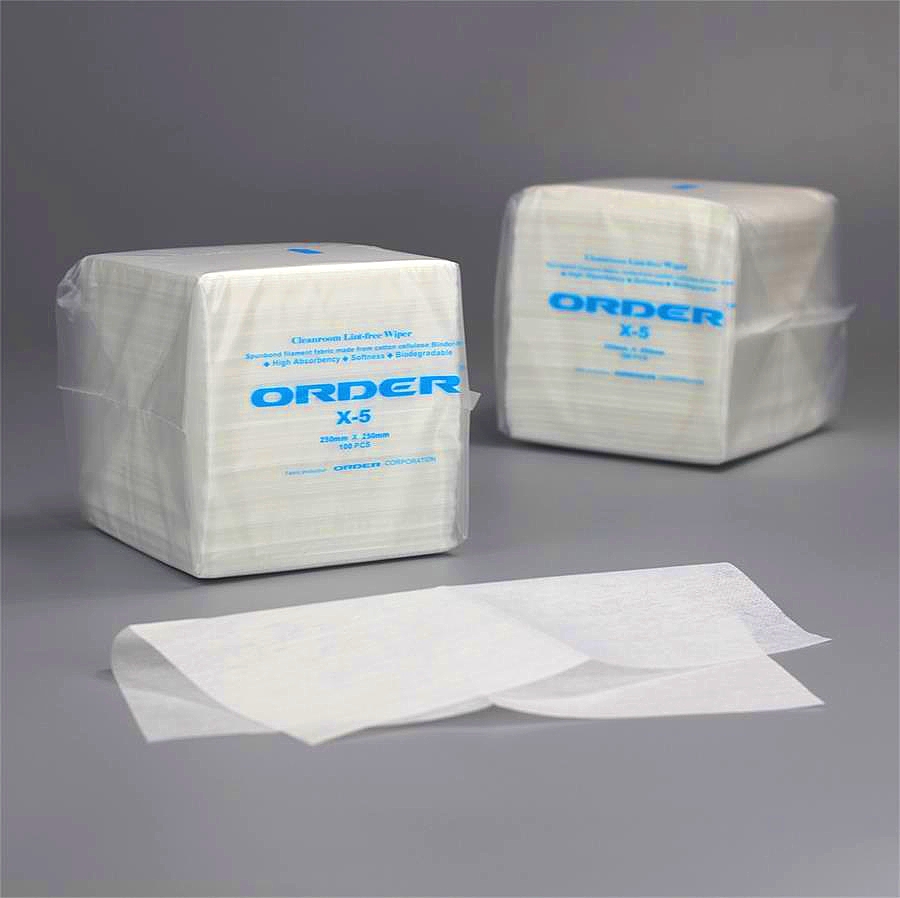
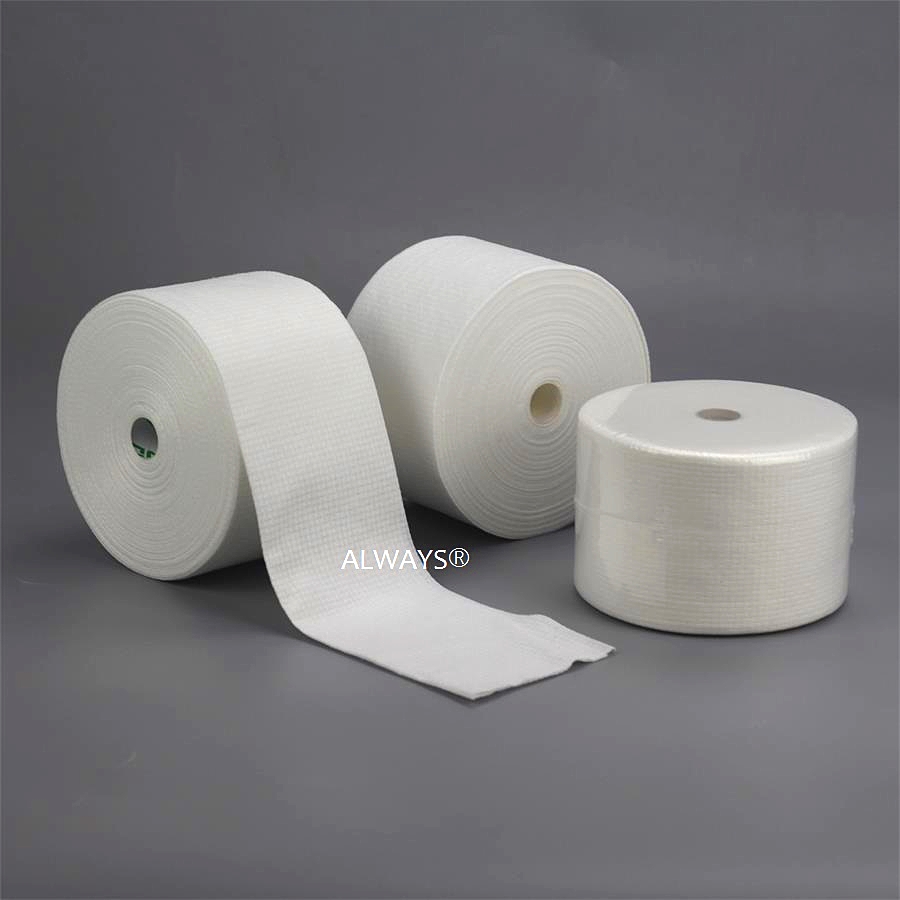
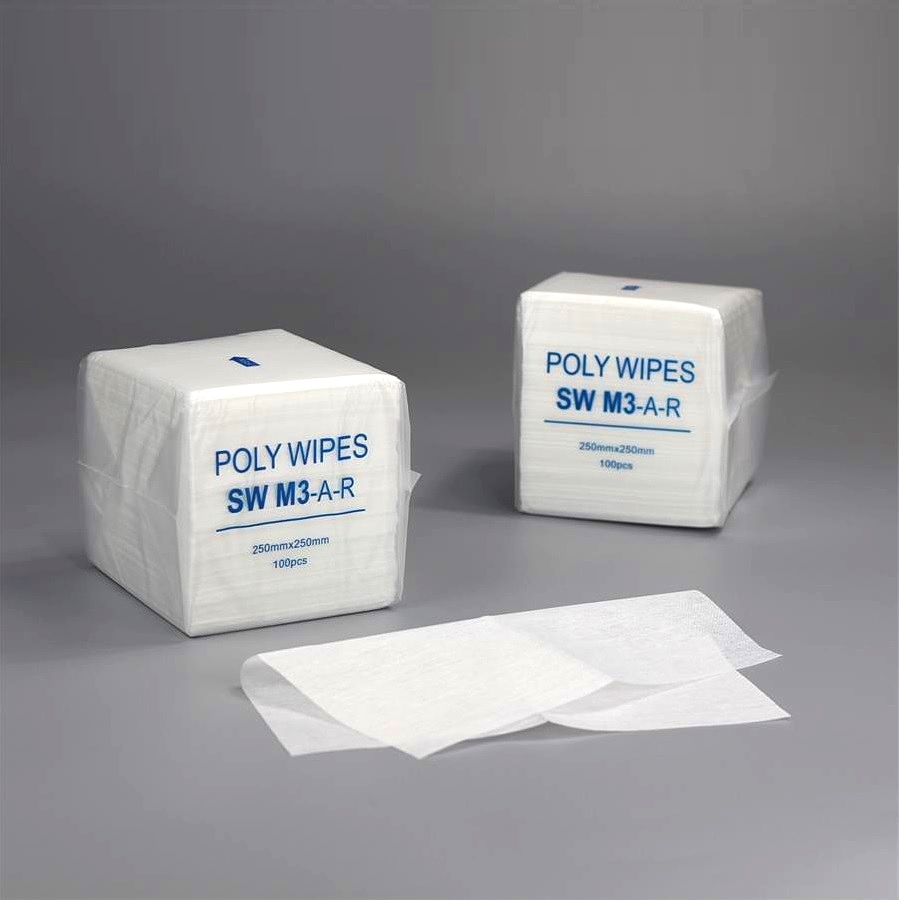
For ISO Class 6 to 8 cleanrooms used in laboratory areas, equipment maintenance zones, and less critical manufacturing steps, polyester cellulose blend wipes or polypropylene wipes are sufficient. These wipes have higher particle generation than those used in stricter classes but are still significantly cleaner than standard industrial wipes. They are often packaged in pop up dispensing boxes or canisters for convenient access. For cleanrooms with frequent cleaning tasks, larger wipe sizes or roll formats may be more economical than individual sheet wipes. For these classes, wipes with IEST RP CC004 Category C classification are suitable.
For cleanrooms using specific solvents or chemicals, match the wipe material to the chemical environment. Polyester wipes are compatible with alcohols, ketones, and most organic solvents but may be attacked by strong acids and bases. Polypropylene wipes have excellent resistance to acids, bases, and many organic solvents but are not compatible with aromatic hydrocarbons or chlorinated solvents. Nylon wipes offer good chemical resistance and high strength but may generate more particles than polyester or polypropylene. For cleanrooms using exotic chemicals, request chemical compatibility data from the wipe manufacturer before purchase.
What is the difference between ISO Class 5 and ISO Class 3 cleanroom wipes?
ISO Class 5 cleanroom wipes typically generate 500 to 2,000 particles larger than 0.5 micrometers per wipe when tested by the liquid particle count method. They are suitable for cleanrooms with airborne particle limits of 3,520 particles larger than 0.5 micrometers per cubic meter. ISO Class 3 cleanroom wipes generate fewer than 100 particles larger than 0.5 micrometers per wipe and are suitable for cleanrooms with airborne particle limits of 35 particles larger than 0.5 micrometers per cubic meter. Class 3 wipes are used for semiconductor lithography and other processes where any particle could cause device failure. Class 5 wipes are used for pharmaceutical filling and medical device assembly where particle control is important but less critical.
Can cleanroom wipes be reused or laundered on site?
Cleanroom wipes are designed for single use only. Reusing wipes can reintroduce contaminants removed during previous cleaning, defeating the purpose of wiping. On site laundering is not recommended because standard laundry equipment cannot achieve the cleanliness levels required for cleanroom wipes. Cleanroom laundering requires specialized equipment, controlled environments, and validated processes. For facilities seeking to reduce wipe consumption, select larger wipe sizes or higher absorbency wipes that can clean more area per wipe. Some cleanrooms use two sided wipes that provide a fresh cleaning surface by folding or flipping the wipe rather than discarding after the first pass.
How should cleanroom wipes be stored to maintain their cleanliness?
Store cleanroom wipes in their original sealed packaging until ready for use. Do not open packages outside the cleanroom. Once opened, keep the package closed when not dispensing wipes. Store unopened wipes in cleanroom storage areas away from chemical fumes, direct sunlight, and temperature extremes. Do not store wipes on the floor or near dirty areas. For cleanrooms using canister dispensers, only transfer wipes to the canister inside the cleanroom and never leave the canister open. Follow the manufacturer's shelf life recommendations; most dry cleanroom wipes have indefinite shelf life when stored properly, but pre saturated wipes have limited shelf life.
What certifications should I look for when sourcing cleanroom wipes for export?
For export to European markets, look for CE marking indicating compliance with relevant directives. For medical device applications, ISO 13485 certification for quality management is required. For pharmaceutical applications, the wipe manufacturer should comply with relevant pharmacopoeia standards including USP 797 or European Pharmacopoeia. For semiconductor applications, look for wipes certified to IEST RP CC004 and tested for ionic contamination by ion chromatography. For all applications, require certificates of analysis for each lot documenting particle counts, fiber release, and extractable residues. Reputable cleanroom wipe manufacturers such as Suzhou Order Cleanroom Material Co., Ltd. maintain multiple certifications and provide lot traceable documentation.
What is the typical minimum order quantity for custom cleanroom wipes?
Minimum order quantities for custom cleanroom wipes vary by manufacturer and specification complexity. For simple customizations such as a specific size or sheet count per pack, manufacturers typically require 2,000 to 5,000 packs. For fully custom wipes requiring unique material blends or substrate specifications, minimum orders of 5,000 to 10,000 kilograms of material are typical. Custom packaging with branded graphics may have lower minimum quantities for the printing plates but higher minimums for the packaging materials. Custom cleanroom wipe manufacturing also requires validation of the laundering and packaging processes for the new specification, which adds to lead time. Lead times for custom wipes range from 45 to 120 days depending on complexity.
1. ISO 14644-1:2015. Cleanrooms and associated controlled environments - Part 1: Classification of air cleanliness by particle concentration. International Organization for Standardization.
2. IEST Recommended Practice CC004.3. (2020). Wiping Materials Used in Cleanrooms and Other Controlled Environments. Institute of Environmental Sciences and Technology.
3. ASTM International. (2022). ASTM D8242: Standard Test Method for Determination of Lint and Other Contamination of Cleanroom Wipes. ASTM International.
4. IEST Recommended Practice CC003.4. (2019). Garment System Considerations for Cleanrooms and Other Controlled Environments. Institute of Environmental Sciences and Technology.
5. United States Pharmacopeia. (2023). USP 797: Pharmaceutical Compounding - Sterile Preparations. USP Publications.
If you are interested in our products, please consult us

 contact us


 English
 日本語
日本語
 简体中文
简体中文