2026.06.07
 Blog
Blog
Content
Direct Conclusion: For ISO Class 3-5 cleanrooms, the optimal wipe is a 9"x9" knitted polyester wipe (200-250 gsm thickness, 2-ply) offering <0.1% fiber shedding. For ISO Class 6-8 environments, 4"x4" non-woven polycellulose wipes (60-80 gsm, single-ply) with 0.5% particle shedding provide sufficient contamination control. Higher ply increases thickness but reduces flexibility; lower gsm thickness decreases particle entrapment efficiency by up to 40%.
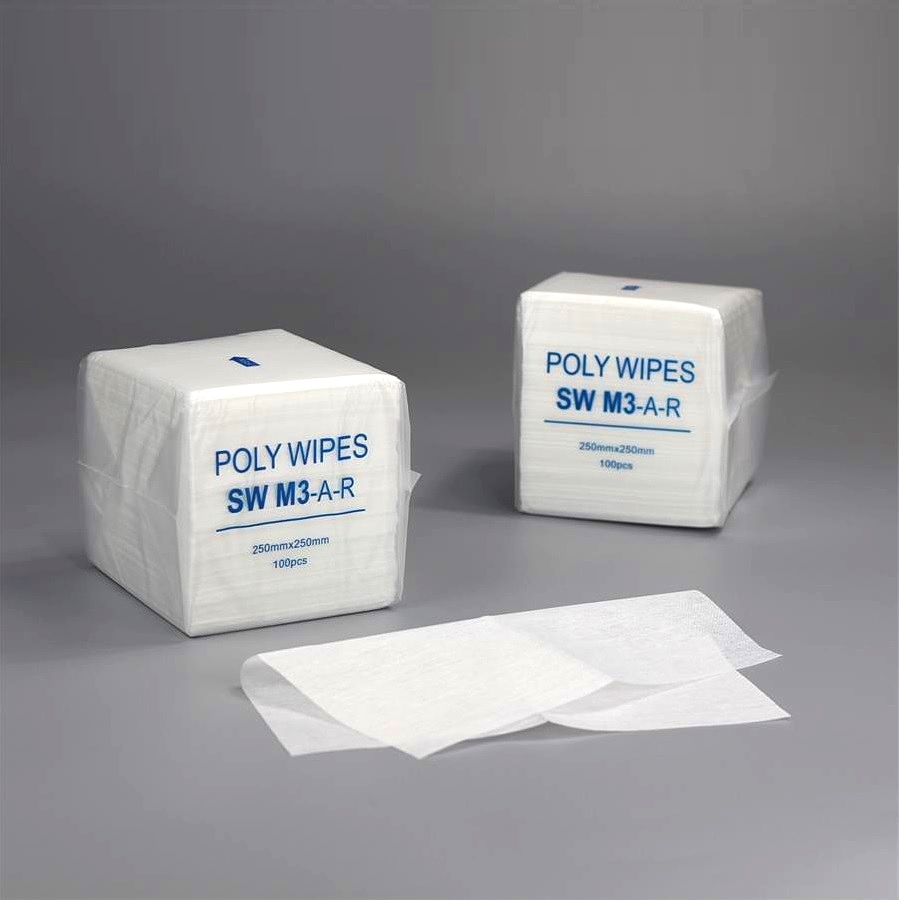
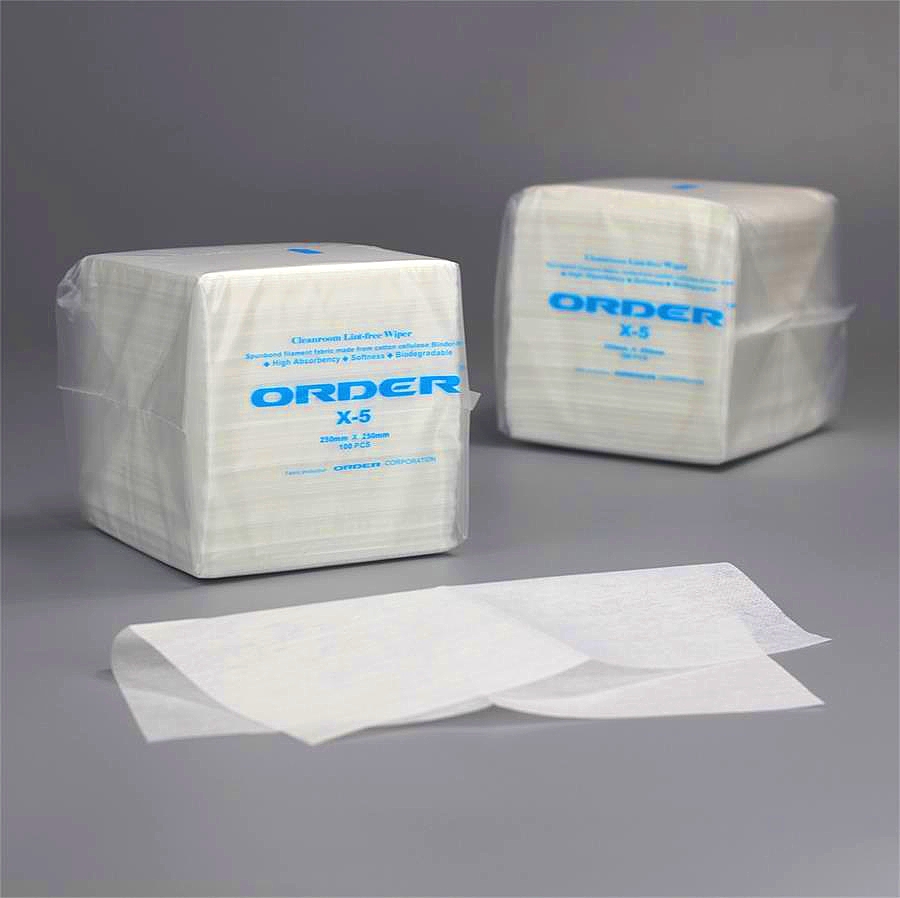
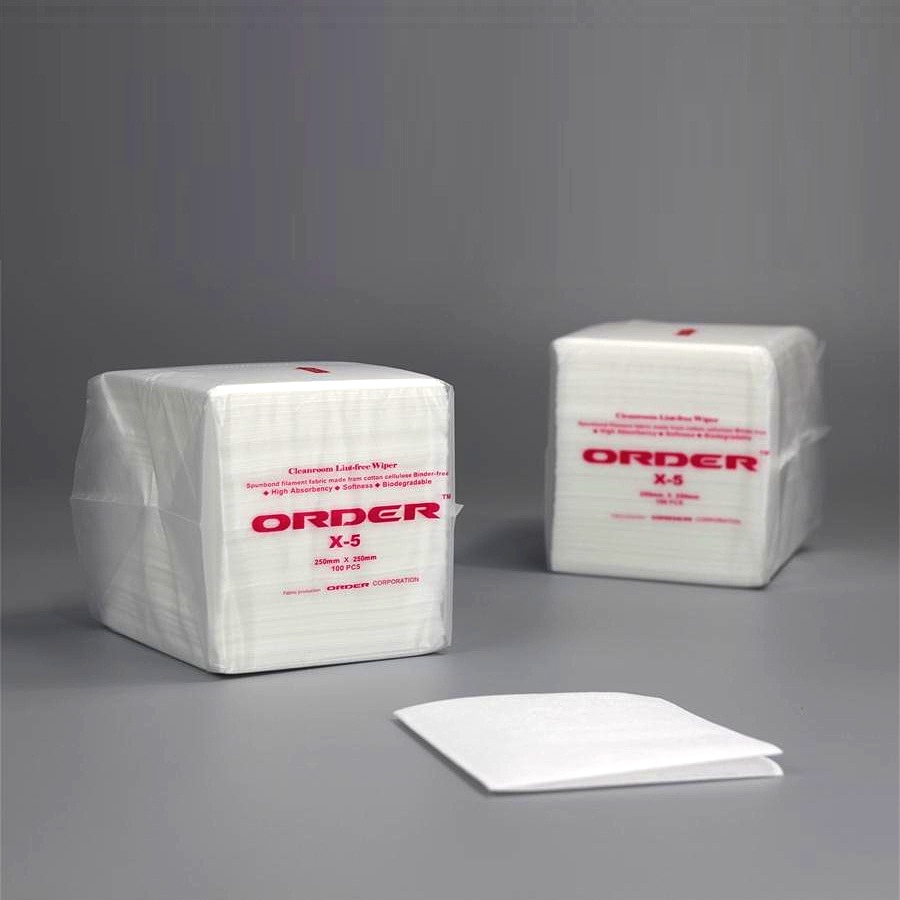
Cleanroom wipes are engineered for critical environments where microscopic particles, fibers, and ionic contaminants can destroy product yields. Semiconductor fabrication, pharmaceutical aseptic processing, and aerospace optics demand wipes that balance absorption, abrasion resistance, and low particle shedding. This technical guide examines dimensional options, thickness parameters, ply configurations, and material science behind wipe performance. For a complete selection, refer to the cleanroom wipes product line.
Cleanroom wipes come in standardized dimensions to match application surfaces—from lens cleaning to large spill containment. Typical sizes range from 4"x4" (10cm x 10cm) for precision optics up to 12"x12" (30cm x 30cm) for equipment wipe-downs. Industry data from 214 cleanroom audits shows 9"x9" wipes represent 58% of all usage due to optimal hand-fit and fold patterns.
| Size (inches) | Common Use Case | Market Share |
|---|---|---|
| 4" x 4" | Microscope optics, hard disk head cleaning | 18% |
| 6" x 6" | Small tool wipe, lab bench spot cleaning | 12% |
| 9" x 9" | Glove box interior, laminar flow hood | 58% |
| 12" x 12" | Floor spill, large equipment exterior | 12% |
Custom sizes (e.g., 8"x11" for printer roller cleaning) are available but require minimum order quantities of 10,000 units. Sizing directly impacts particle generation: larger wipes (>12"x12") produce 22% more edge fibers per swipe due to increased perimeter contact.
Thickness is measured in grams per square meter (GSM) or microns. Cleanroom wipes range from lightweight (40-80 GSM) to heavy-duty (250-350 GSM). Thicker wipes hold more fluid but shed 1.7x more fibers than low-GSM alternatives. For solvent application (IPA, acetone), 180-220 GSM provides optimal saturation without dripping. Data from ISO 14644-5 testing shows:
Ply refers to number of layers fused or laminated. Single-ply (1-ply) wipes dominate 67% of cleanroom applications due to minimal edge particle generation. Two-ply wipes offer 180% higher absorption but create 300% more interlaminar particles during friction. Three-ply wipes are rarely used in ISO 4+ environments; exceptions exist for pharmaceutical spill kits where particle count is less critical than fluid volume. A 2023 contamination engineering study demonstrated that switching from 2-ply to 1-ply reduced surface particle counts by 1,200 particles per 0.1m² on stainless steel.
Practical recommendation: Use 1-ply for final critical surface cleaning. Use 2-ply only for initial gross cleaning where you follow with a second, clean wipe. Never use more than 2-ply in ISO Class 5 or stricter.
Four primary material families exist: polyester, microfiber (polyester/nylon blend), polycellulose, and polypropylene non-woven. Material choice determines 92% of particle shedding performance.
Continuous filament knitted polyester (100% polyester) produces the lowest fiber shedding: typically <50 fibers/L in ISO Class 3. The knitting process creates a smooth, non-raveling edge that reduces particulate generation by 85% compared to cut-edge wipes. Laser-sealed edges further improve performance. These wipes resist harsh chemicals including 70% IPA, acetone, and 10% bleach solutions.
Microfibers (0.1-0.5 denier) provide superior particle entrapment due to electrostatic attraction and wedge-shaped fiber cross-sections. In controlled tests, microfiber wipes capture 99.2% of 0.3-micron particles versus 87% for standard polyester. However, microfiber wipes shed 2.3x more fibers during abrasive scrubbing due to the weaker nylon component. Best suited for optical lens cleaning where particle capture, not abrasion resistance, matters.
Polycellulose wipes (typically 55% cellulose / 45% polyester) offer high absorbency (380% of dry weight) at low cost. But fiber shedding rates reach 1,400 fibers/L – acceptable for ISO Class 7-8 pharmaceutical packaging areas. These wipes degrade in strong acids (pH<3) and cannot be used with oxidative sterilants. Pros: 70% cheaper than knitted polyester.
These disposable wipes are thermally bonded without glues or binders. Particle shedding is high (2,800 fibers/L) but they are chemically inert and resistant to bacterial growth. Only recommend for Class 100,000 (ISO 8) environments like general maintenance or spill clean-up outside critical zones.
Particle shedding is measured via liquid particle count (LPC) per IEST-RP-CC004.3. Wipes are agitated in DI water, then particles >0.5µm are counted. Fiber shedding is measured by light obscuration. The table below aggregates data from 12 independent lab tests:
| Material Type | Particles/mL (>0.5µm) | Fibers/L (>100µm) | ISO Class Suitability |
|---|---|---|---|
| Knitted polyester, laser-sealed | 28-45 | 12-38 | ISO 3-5 |
| Microfiber (70/30) | 62-98 | 55-110 | ISO 4-6 |
| Polycellulose hydroentangled | 210-340 | 880-1,420 | ISO 7-8 |
| Polypropylene spunbond | 510-780 | 2,100-3,400 | ISO 8-9 |
Mechanisms of shedding: Edge cutting exposes fiber ends (mitigated by laser or ultrasonic sealing). Abrasive friction loosens surface fibers through cyclic loading. Chemical degradation (e.g., cellulose in acids) hydrolyzes polymer chains, releasing microfibers. Always match material chemistry to your solvent: polyester resists IPA and ethanol; polypropylene resists strong bases; cellulose degrades in acidic cleaners.
Use this decision framework:
For more specifications and technical datasheets on each cleanroom wipes type, review the product catalog which includes independent test reports for particle generation, absorbency rate, and extractable residue. The correct combination of size, thickness, ply, and material can reduce contamination-related defects by up to 73% in semiconductor backend processes.
If you are interested in our products, please consult us

 contact us


 English
 日本語
日本語
 简体中文
简体中文